

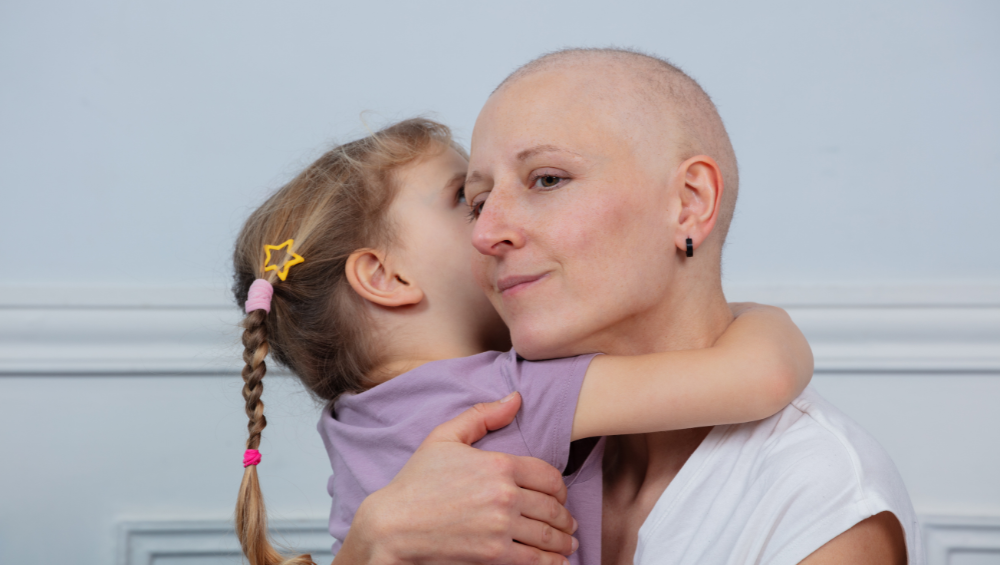
Talking to a child about a parent's cancer is one of those conversations no one wants to have. Many adults say, "I don't know what words to use," "I'm afraid I'll scare them," "I don't want to take away their childhood," or "maybe it's better not to say anything." These fears are understandable – a parent facing their own diagnosis, anxiety, treatment, and uncertainty often tries to shield their child from the difficult times.
But children usually know more than we think. They don't always understand the facts, but they sense change. They notice quieter voices at home, hear interrupted conversations, notice fatigue, crying, tension, more frequent trips to the doctor, and changes in appearance or daily routine. When they receive no explanation, they try to piece together their own version of events. A child's imagination, especially in a situation of anxiety, can suggest things that are more difficult than the truth delivered calmly, in simple language, and in the presence of an adult. That's why talking about illness doesn't deprive a child of their safety. On the contrary, it can be an attempt to restore it. A child does not need to know all the medical details, but they do need to feel that adults are telling them the truth in a way they can handle. They need to know what's going on, what might change in the near future, who will take care of them, and whether they're allowed to ask questions. They also need to hear that their parent's illness isn't their fault.
This is one of the most important sentences that should be repeated especially with younger children:„It's not your fault”Young children think concretely and often egocentrically, which is natural in development. They can connect the dots in ways that wouldn't occur to an adult: "Mom got sick because I was naughty," "Dad went to the hospital because I was angry with him," "If I'm really good, Mom will get better." Therefore, it's worth saying directly: "You didn't do anything to make me sick. You can't cause cancer with your behavior, anger, or thoughts." Another crucial topic concerns caregiving and, therefore, a sense of security. When a parent is ill, a child may fear not only the illness itself but also what will happen to their daily life. Who will pick them up from school, will Mom be home, will Dad be able to come to the concert? Will they have to move to Grandma's? Will dinner, storytime, practice, lessons, or a friend's birthday still be possible? For a child, specifics can be more reassuring than the general assurance that "everything will be fine." It's worth saying, "I'm going to the hospital on Thursday. Your aunt will pick you up then. I'll call you this evening if I can. Dad will make dinner and put you to bed." This doesn't have to be a perfect plan. It's important for a child to know that adults are thinking about them. Many parents ask whether to use the word "cancer." It's often helpful to use it, but calmly explain what it means. Avoiding the name can result in a child accidentally hearing it from someone else, at school, in family, or reading it online. The word can then sound more threatening because it appears without context and without an adult to help them understand it. You could say, "I have a disease called cancer" or "Doctors have found a tumor in my body. I'm going to get treatment to help me." Of course, we tailor our messages to the child, their individual needs, situation, and, of course, age.
You don't have to say everything at once. The first conversation doesn't have to be a lecture—and it's even better if it isn't. It's better to provide some simple information and leave room for questions. A child might ask something very difficult or seemingly trivial right away. They might ask, "Are you going to die?" and a moment later, "Can I go to Cuba?" They might cry, get angry, leave the room, change the subject, or not respond at all. A lack of response doesn't mean indifference. Sometimes a child needs time to absorb the message and return to it later.
Simplicity helps in conversation – that is, simple, age-appropriate messages – also in terms of the generality of the message. With young children, it's important to be brief and specific. A preschooler may primarily need information about what they'll see and what will change. School-age children usually want to understand more. They may ask where the illness is, how treatment works, whether the parent will be hospitalized or recover. Teenagers often need more detailed information and, at the same time, greater respect for their autonomy. They may seek information on their own, ask about the prognosis, become angry, withdraw, or try to take on the adult role. In any case, it's important not to leave children alone with speculation, the internet, and overwhelming responsibilities. It's also worth remembering that talking to a child about a parent's illness isn't a single conversation. It's a process. It's also crucial not to make promises that can't be guaranteed. Hope doesn't have to be based on empty assurances – it can be based on presence, a plan, treatment, care, and age-appropriate truth.
A child has a right to their emotions. They can be afraid, angry, cry, be jealous of the attention their sick parent receives, be tired of talking about the illness, long for normalcy, or even say something that hurts. They can also laugh, play, go to a birthday party, or celebrate a good grade. This doesn't mean they don't understand the gravity of the situation. Children need the opportunity to be children, even when something difficult is happening in the family. It's important not to make a child the emotional caregiver of adults. You can say, "I'm sad today," but you shouldn't burden a child with details they can't handle, nor should you expect them to comfort their parent. It's good to ensure consistency in communication between adults. If a parent says one thing, a grandmother says another, and someone in the family whispers, "Just don't tell him anything," a child can feel even more confused. It's worth establishing what we say, what words we use, and who can answer the child's questions. It's also worth informing the school or preschool, and at least one trusted person: a teacher, counselor, or psychologist. This isn't to stigmatize the child, but rather to ensure adults can notice any changes in behavior, decreased concentration, withdrawal, irritability, or a need for increased attention.
Some children will want to help. This can be an important way for them to cope with helplessness. It's worth allowing small, safe forms of assistance that don't take away from childhood: offering a blanket, drawing a picture, choosing a movie, helping make tea, or preparing a card for the hospital. At the same time, it's important to ensure that the child doesn't begin to feel that their parent's well-being or treatment depends on their behavior. Help can provide closeness, but it shouldn't turn the child into a small adult.
There are situations in which it's worthwhile to seek the support of a psycho-oncologist, child psychologist, or school counselor. This is especially true when a child has prolonged sleep problems, becomes noticeably withdrawn, has severe stomach pain or headaches without a discernible medical cause, loses interest in things they used to enjoy, has significant difficulties at school, behaves aggressively, begins to take on excessive responsibility, or is extremely afraid of separation from their parent. It's also worth seeking help if a parent doesn't know how to talk about a relapse, palliative treatment, or a deterioration in their health. The most important thing when talking to a child isn't finding the perfect words—perfect words probably don't exist. They don't. The most important thing is that the child isn't left alone with silence, speculation, and fear. They should hear the truth in an age-appropriate way, and be able to ask questions. They should know that their emotions are okay. They should have the right to a normal life, play, school, friends, and rest from illness. And they should feel that even though something difficult has happened in the family, adults are still there to recognize their needs.
***
Author: Katarzyna Binkiewicz, M.A.
